Also in "Old Ciaro" is the Ben Ezra Synagogue. Jews have been living in Egypt for for over two millenia. In fact tradition claims that this synagogue marks the spot where the prophet Jeremiah gathered the Jews in the 6th century after Nebuchanezzar destroyed the Jerusalem temple. The spring next to the synagogue is believed to be the spot along the Nile where the Pharaoh's daughter found Moses in the reeds, and where Mary drew water to wash Jesus. 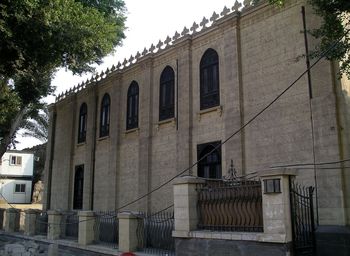 This synagogue is named after the 12th century rabbi of Jerusalem who restored this once Christian church into a synagogue. In 1890, a large amount of papers were discovered in the synagogue that show what life was like for the North African Jewish community from the 11th to 13th centuries. In 1948 there were 75,000 Jews living in Egypt. Egyptian-Israeli hostilities in the 1950s and 60s, saw tens of thousands of Jews being explelled from Egypt and today only a small community of abouut 100 Jews live in Cairo. 
Sabah al-khayr, sabah an-noor! Shukran! Ana izmi Maria! Ma-as sa-laa-ma! The Egypt Forum Fellows had a delightful afternoon with Dr. Nahed Awni from the American University in Cairo receiving a lesson on "Survival Egyptian Arabic." (If I only had a few more months to spend in Egypt, I'd be fluent!) MEDIEVAL CAIRO From the mid 13th through to the early 16th centuries, Cairo was the intellectual and cultural center of the Islamic world. On Tuesday our group explored the section of Cairo that harkens back to that medieval time. This part of Cairo is home to many magnificent masoleums, mosques and medrassas contructed by the Sultans of the Fatimid and Mamluk periods. 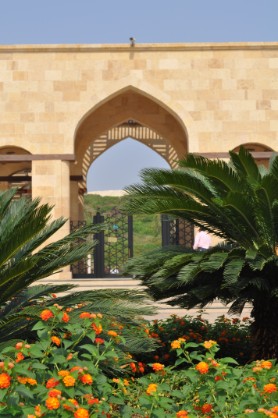 We started our day by visiting Al-Azhar Park in the eastern section of Cairo. Al-Azhar is a beautiful park filled with gardens and water fountains, cafes and an open air theatre. The syle of the park takes its inspiration from Islamic architecture from around the Arab world. What makes the location of this park so inteersting is that it sits on what had once been a mountain of centuries worth of collected garbage. The park opened in 2005 and was funded by Aga Khan Trust for Culture. Dina Bakhoum, projects development director gave us agreat tour of the park. 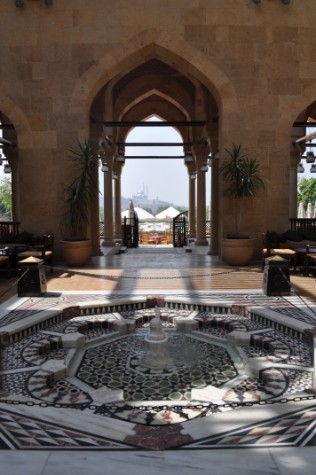
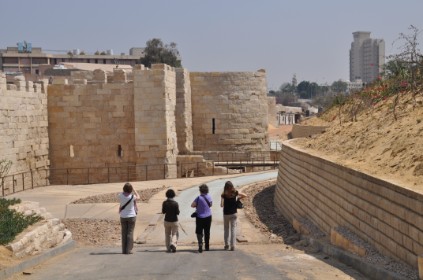 Dina also took the group on a tour of the Darb al-Ahmar district and the various restoration projects underway with funds from the Aga Khan Trust for Culture. This is a portion of the city wall that once surrounded Cairo during the rule of Salidin in the 12th century. The wall was unearthed and restored starting in 2009. 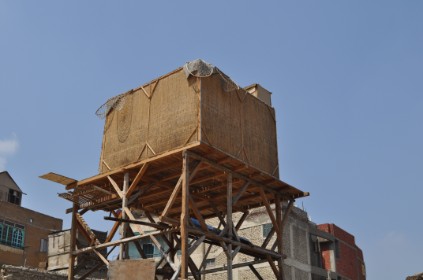 This is a pigeon breeding hut. It is a very popular hobby in Egypt. The pigeons. Here's a video that shows one man's love for his pigeons. 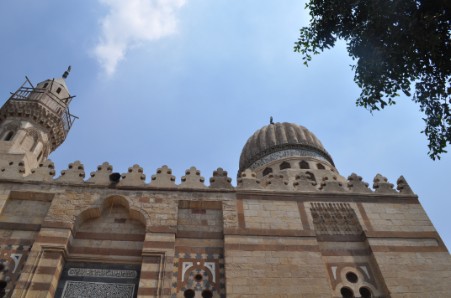 Minaret and dome over the Aslam al-Siladhar Mosque built by the Mamluk amir Al-Siladhar in 1345. Recently restored by the efforts of the Aga Khan Trust for Culture. 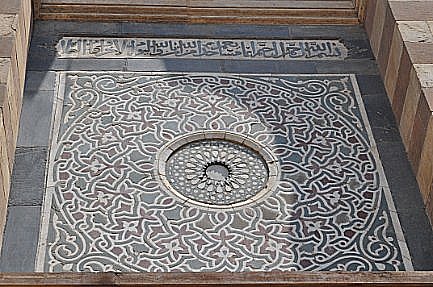 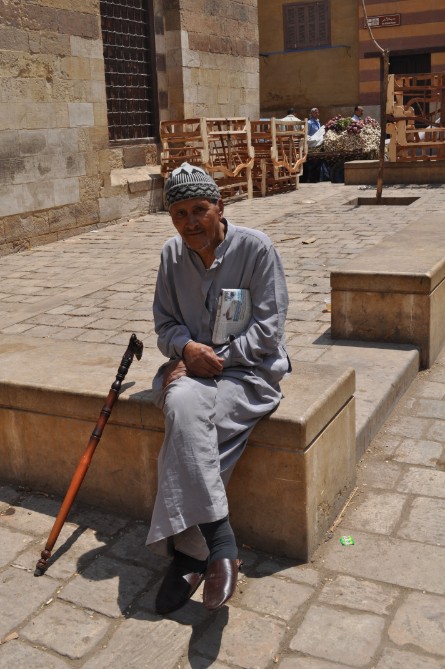 In Cairo one can often see men, such as this gentleman, wearing the traditional dress called a galabiyya, or full length robe. 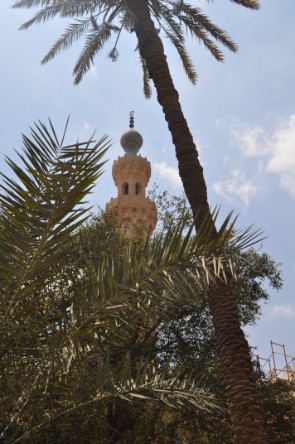 While with Dina our grouped toured a few mosques and masoleums under restoration including this one-The Blue Mosque. The minerat (the tower of the mosque where the call to prayer is announced) of the mosque has been restored and currently work is being done on the interior. Once finished it will once again be used by the community for prayer. 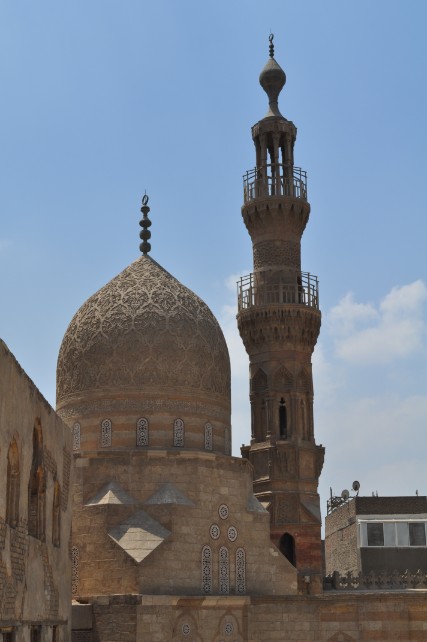 A restored Mamluk Dome near Al-Azhar Park. Notice the intricate arabesque designs chiseled onto the surface of the dome. The craftsmen of medieval Cairo were master builders as evidenced by their splended workmanship both outside and inside these structures. 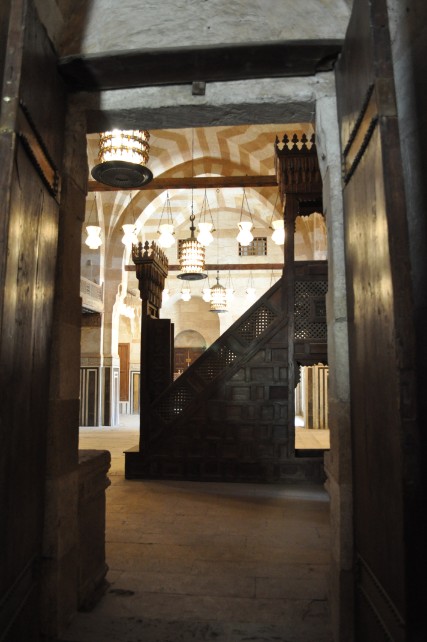 The interior of a restored Mamluk mausoleum. During the Fatimid and Mamluk period the Sultans built many elaborate tombs for themselves and their family members called mausoleums. 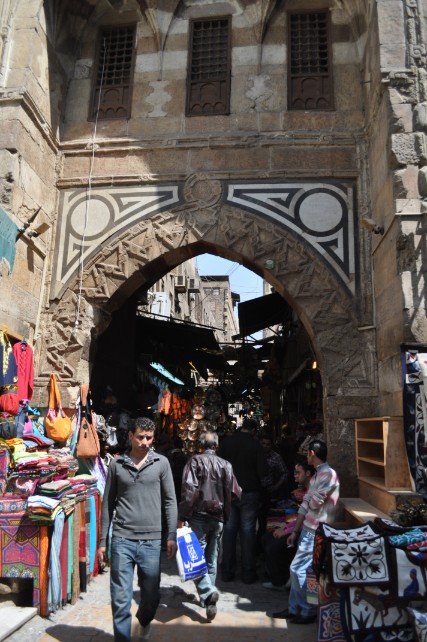 While touring Medieval Cairo the Egypt Forum group shopped for trinkets in the Khan al-Khalili. Cairenes have been selling their wares in this massive bazaar since the 14th century, The area is marked by small alleyways full of shops of all kinds as well as coffehouses. 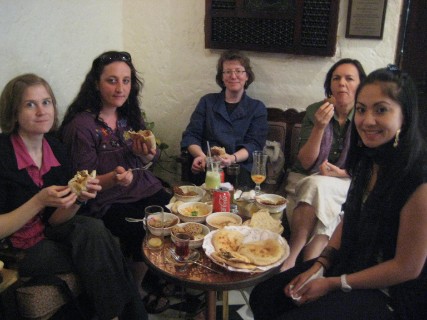 The most famous is Fishawi's Coffeehouse, which has been in continuous operation since 1773. It was a must stop for our group after some exhuastive souvenir hunting! |
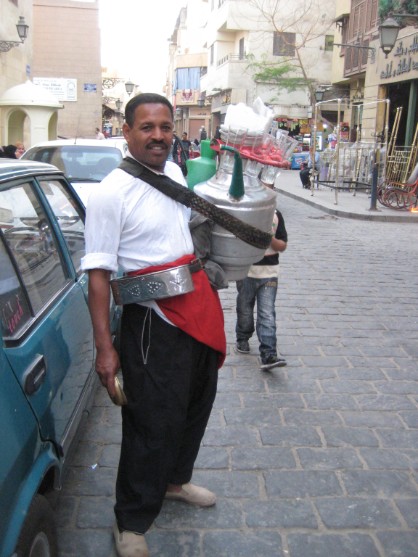 Here's an erk sous (Liqourice juice) seller along the Sharia al Muizz. The sharia al-Muizz is the former grand thoroughfare of medieval Cairo It was the grand marketplace and heart of medieval Cairo, once filled with shops, entertainers, story-tellers and food stalls. It also contains the highest concentration of medieval Momluk monuments in the city. 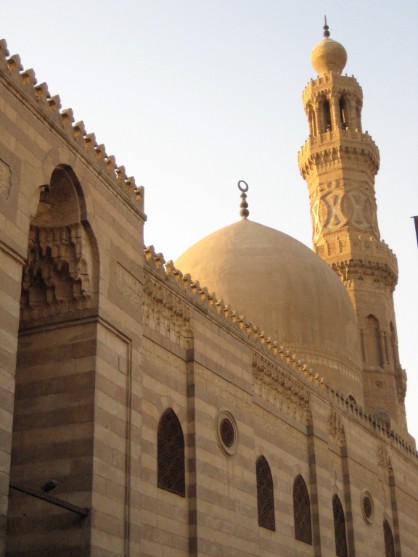 This is the Complex of Sultan Barquq along the Sharia al-Muizz. Sultan Barquq came to power in 1382. This complex contains a masoleum, mosque and madrassa. 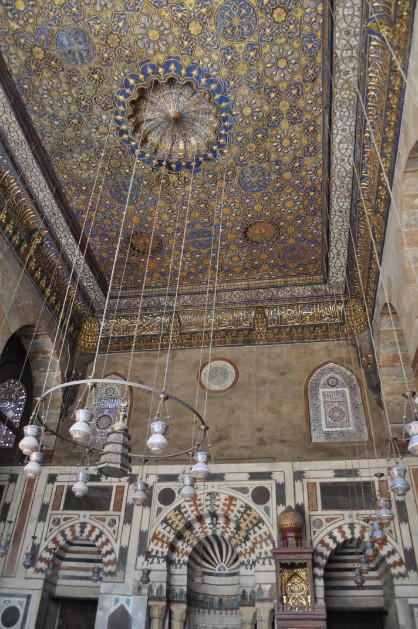 This is one of the oldest Mamluk complexes in Cairo and it is quite beautiful to see. Here in the mosque one can see a colorful ceiling which contain floral designs. 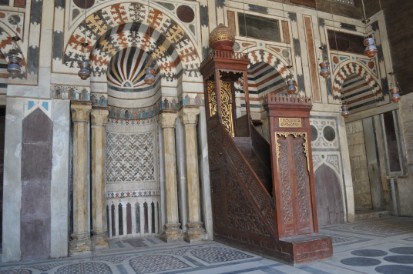 Inside the mosque is the Mihrab, or the niche in the wall that marks the direction of Mecca. Muslims are required to pray five times a day must pray at the mosque on Fridays, their day of rest. To the left of the Mihrab is the Minbar where the iman leads the Friday prayers. 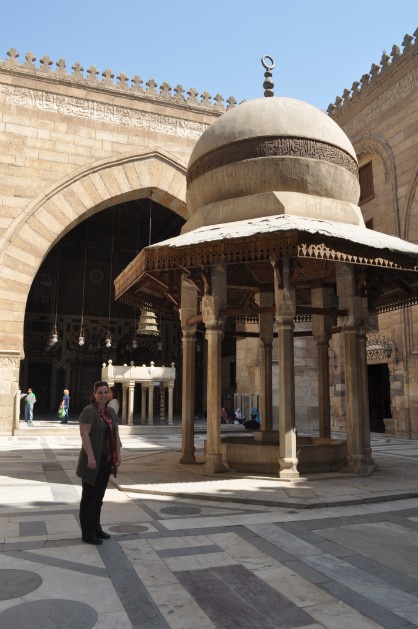 Outside the mosque is the open courtyard where the faithful would pray and study. Behind me is the dikka, or raised marble platform where a member of the faithful would climb so that the faithful can be lead in prayer. In the center of the courtyard is the fountain and surrounding the courtyard are the madrassas or schools of learning where traditionally boys at the age of 7 would begin their formal education in religion, law, medicine, astronomy, literature and history. 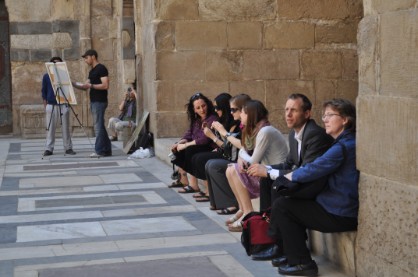 A reflective moment for the groups inside the mosque and madrassa of Sultan Barquq. 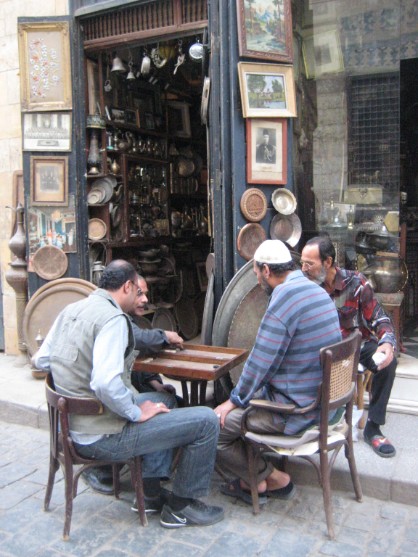 A group of men playing Backgammon along the Sharia al-Muizz. 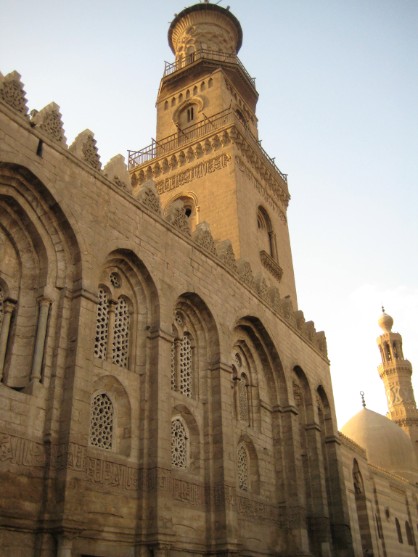 This is the Complex of Sultan Qalaun. This mausoleum and madrassa was built in 1270. Its newly restored interior is decorated with inlaid stone and stucco, patterned with stars and floral motifs and lit by beautiful stained glassed windows. 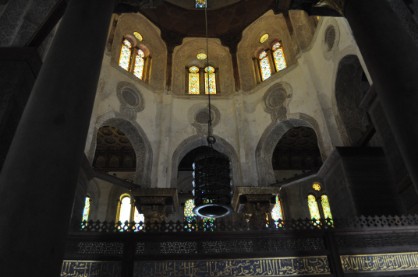 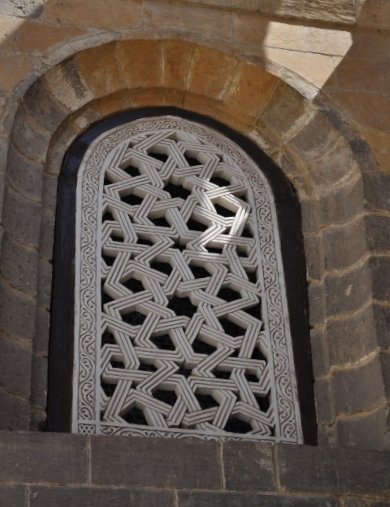 Islamic architecture and art includes the use of geometric as well as floral and arabesque designs. Here's a picture of the window detail of the Sultan Qalaun mosque. Notice the elaborate geometric patterns. Youth Activism 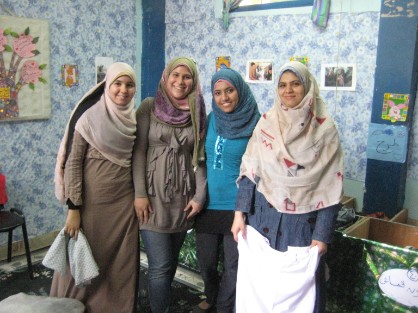 Also on Tuesday our group visited the Resala Organization, an Islamic charity. We had the pleasure of seeing all that this non-profit social servive group is doing to help the residents of Cairo who are in need. These young Resala volunteers are busy sorting donated clothing for the needy. 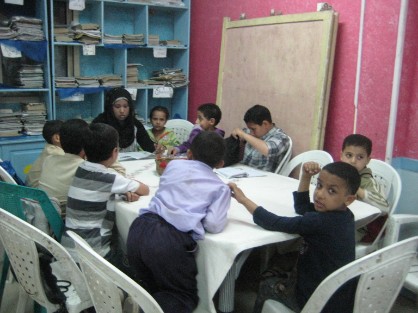 A Resala volunteer tutoring at risk students in an afterschool literacy program. 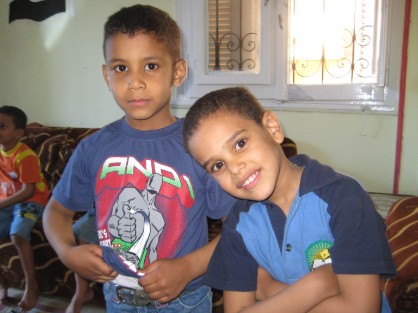 Two young orphan boys being cared for by Resala volunteers. 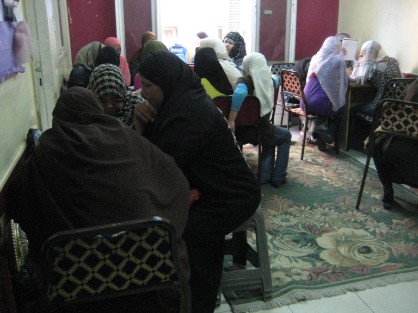 The Resala organization also holds women adult literacy programs. |
